Most businesses hire WordPress help the same way. Post a project, get a few quotes, pick one. That works fine for a one-off site. It works less well once WordPress becomes an ongoing part of how the business operates.
At that point, the question shifts. It’s no longer just who can build this. It becomes who should work with us regularly. Hire WordPress developers with that longer relationship in mind, and the evaluation criteria change quite a bit.
This guide covers hiring models, developer skills, and team structure. It also covers costs, project evaluation, communication, outsourcing, and long-term engagement. Each of these affects whether a hire actually works out well.
Whether you’re hiring for the first time or replacing a team that isn’t working out, the same fundamentals apply.
Key Takeaways
- A dedicated WordPress team differs from project-based hiring in commitment and availability. It also differs in how deeply the team understands your site over time.
- Hiring models range from individual freelancers to full agencies. Each comes with different tradeoffs in cost, availability, and depth.
- Technical skill matters, but communication and project management ability affect the day-to-day experience just as much.
- You can outsource WordPress development successfully with clear processes in place, regardless of where the team is located.
- Long-term engagement usually pays off once WordPress work becomes a recurring, rather than occasional, business need.
What Does “Hiring a Dedicated WordPress Team” Actually Mean?
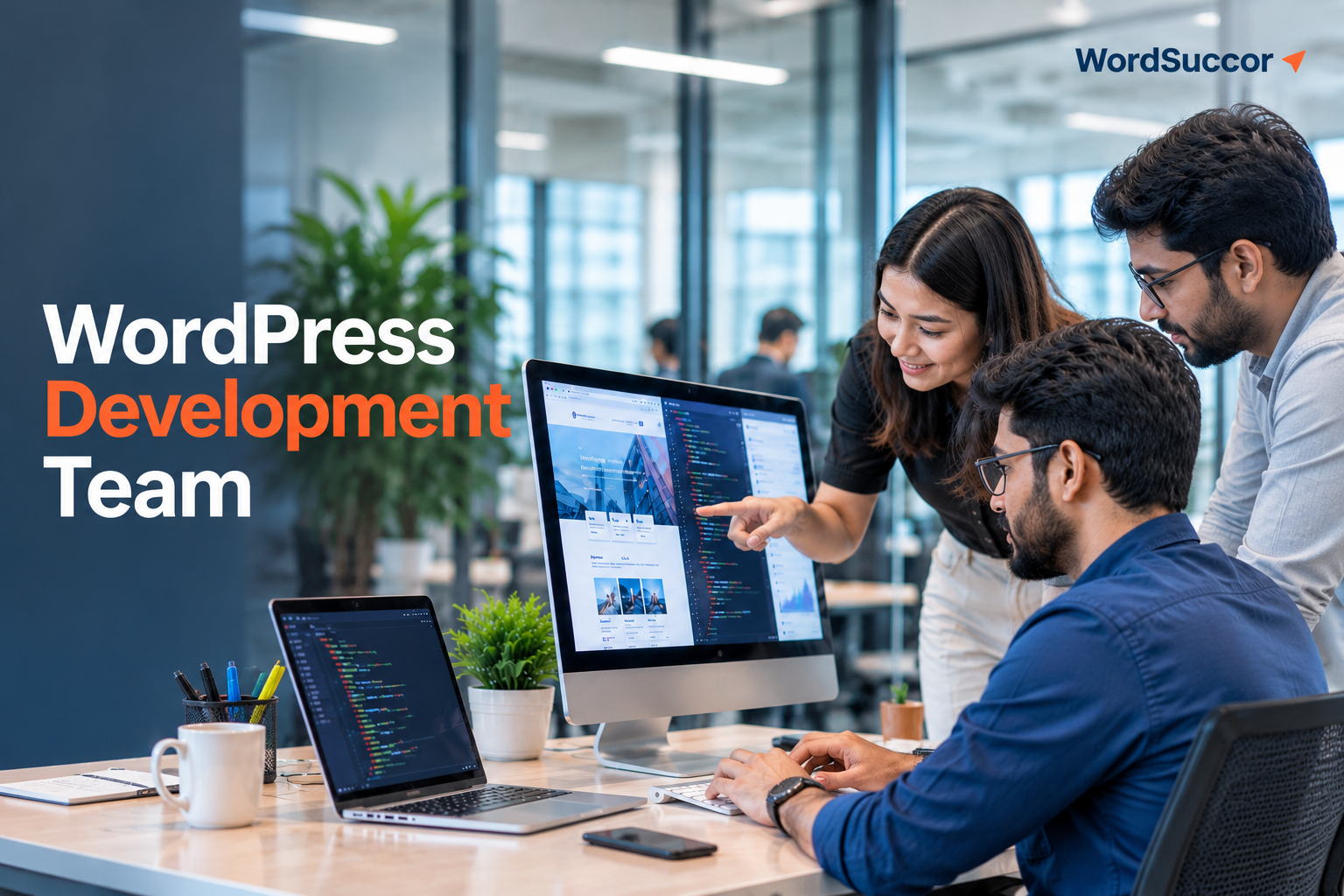
A dedicated WordPress development team works specifically on your projects, on an ongoing basis. This differs from being booked for a single deliverable and then moving on to another client entirely. This can mean an internal hire, a fully outsourced team, or a hybrid arrangement.
The distinction matters because it changes what “good” looks like. A one-off project mainly needs a team that can deliver the current scope well. A dedicated team needs more than that. It needs to understand your business context and your codebase. It also needs to know your priorities well enough to move quickly on future work, often without a lengthy briefing each time.
Businesses usually reach this point once WordPress work stops being occasional. A few signals point that way: frequent updates, ongoing feature requests, or a site that’s central to revenue. Any of these favor a dedicated relationship over repeated one-off hiring, since the overhead of restarting each time adds up.
An online store adding new products weekly is a common example. So is a content-heavy site publishing several posts a week, each needing small layout or formatting adjustments.
Hiring Models: Freelancer, Agency, or Dedicated Team
There are a few common ways to bring in WordPress development help. Each one fits a different situation.
A single freelancer works well for smaller, well-defined projects. Cost tends to be lower, but availability is limited to one person’s schedule and skill set. If they’re unavailable, work simply stops until they return. There’s also no backup if their skills don’t quite match a new requirement.
An agency offers more structure. Multiple developers, a project manager, and coverage if one team member is out. This usually costs more than a freelancer. In exchange, it reduces the risk of a stalled project when someone is unavailable, which matters most on tighter deadlines.
Dedicated WordPress developers, hired directly or through an outsourcing arrangement, sit between these two options. This model offers ongoing availability similar to an in-house hire. It often costs less than building an internal team from scratch.
Key Skills to Look for When You Hire WordPress Developers
Technical skill matters, but not every WordPress developer has the same kind of technical skill. The right mix depends on what your site actually needs.
A few skill areas are worth checking specifically:
- PHP and WordPress core knowledge: This underlies nearly everything WordPress does, from themes to plugins to custom functionality.
- Front-end development: HTML, CSS, and JavaScript skills affect how well a site performs and displays across devices.
- Database and performance knowledge: This matters more as a site grows in traffic, content volume, or e-commerce complexity.
- Security awareness: Developers should understand common vulnerabilities. They should also know how to avoid introducing them into custom code.
- Communication skills: A technically skilled developer who can’t explain tradeoffs clearly makes collaboration harder than it needs to be.
Ask candidates to walk through a past project, including one decision they’d make differently now. The answer reveals more than a list of technologies ever could.
A quick technical test can help too, though it shouldn’t be the only filter. Some strong developers interview poorly, and some smooth interviewers write messy code. Reviewing actual code from a past project, when possible, often reveals more than either a test or an interview alone.
How a WordPress Development Team Is Structured
A dedicated WordPress development team typically includes a few distinct roles. This holds true even on a relatively small engagement.
A project manager or account lead coordinates requests, timelines, and communication. This keeps requests from getting lost between people as work moves forward. A backend developer handles server-side logic, custom functionality, and database work. A front-end developer focuses on how the site looks and behaves in the browser. Larger teams often add a dedicated QA tester, who catches issues before they reach a live site.
Smaller engagements sometimes combine these roles across fewer people. What matters most is that every function gets covered by someone. A single generalist rarely handles all of it equally well, especially as project complexity grows.
Ask a prospective team who specifically would work on your account. A named team is usually a good sign. It suggests roles are actually staffed, rather than a vague promise of “our developers.”
How Much Does It Cost to Hire WordPress Developers?
Costs vary widely based on the hiring model, developer experience, and geographic location. A freelancer typically charges less per hour than an agency. Total project cost still depends heavily on scope and efficiency, not just the hourly rate.
Dedicated team arrangements are often priced as a monthly retainer. This typically covers a set number of hours, or a defined scope of ongoing work. It tends to work out more predictably than paying per project, especially once work becomes recurring.
Location affects pricing too. Businesses that outsource WordPress development to teams in different regions can access meaningfully lower rates. This should never be the only factor, though. Communication quality and timezone overlap matter just as much as the rate itself.
A cheaper rate can lead to slow communication or repeated rework. That often costs more in the end than a higher rate with a smoother process.
How to Evaluate a Project Before Hiring
Before bringing in a team, get clear on what you actually need. This makes it far easier to compare quotes and evaluate whether a team is a good fit.
Write down your must-have features and your rough timeline. Also note what ongoing support looks like beyond the initial build. If you’re evaluating a full custom WordPress development project, this scope should include integrations and performance expectations. It should also cover any specific technical constraints the site needs to work within.
A vague request tends to produce vague, hard-to-compare quotes. A detailed one lets you evaluate teams against the same standard, rather than comparing apples to oranges across proposals.
Communication and Working With a Remote or Outsourced Team
Outsourcing WordPress development doesn’t inherently create communication problems. It does require a deliberate process, though. Assuming things will work themselves out tends to backfire once real deadlines are involved.
A few practices help significantly:
- Set a regular check-in schedule: Weekly updates, even brief ones, prevent small misunderstandings from becoming large ones.
- Use a shared project management tool: This keeps requests, priorities, and progress visible to everyone involved.
- Clarify timezone overlap early: Even a few overlapping hours each day makes real-time collaboration far easier when it’s actually needed.
- Document decisions, not just conversations: A quick written summary after a call avoids disagreements about what was agreed.
Teams that communicate well tend to behave the same way whether they’re down the street or across the world. Location matters far less than the process behind it.
A quick way to test this before committing: send a moderately complex question during the sales process. How clearly, and how quickly, a team answers often predicts how the actual working relationship will go.
Long-Term Engagement: When to Move Beyond Project-Based Work
Project-based hiring works well for a single, well-defined deliverable. It starts to strain once WordPress work becomes a recurring need rather than an occasional one. Each new project restarts the same onboarding process, which adds up in wasted time over a year.
A few signs point toward a longer-term arrangement:
- You’re requesting new work every month. Repeated one-off hiring wastes time re-explaining context each time you start a new project.
- Your site is central to revenue. Downtime or slow fixes carry real business costs. This favors a team already familiar with your setup over a new hire.
- You need faster turnaround than project-based quoting allows. A dedicated team can typically respond faster than sourcing a new freelancer for each request.
At this stage, it’s also worth researching what to look for in a WordPress development company more broadly. The same evaluation criteria apply whether you’re hiring for one project or for an ongoing relationship.
What to Include in a Dedicated Team Agreement
A long-term arrangement works best with clear terms in writing, not just a verbal understanding. A few items are worth confirming upfront.
- Response time expectations: Define how quickly the team responds to a request, and how urgent issues get escalated versus routine ones.
- Scope and hours: Clarify whether the arrangement covers a fixed number of hours, unlimited requests within reason, or something in between.
- Code and content ownership: Confirm in writing that your business owns everything built, regardless of who built it.
- Notice period for ending the engagement: A clear exit process protects both sides if the relationship isn’t working out.
These details rarely feel urgent to settle at the start of a relationship. They matter considerably more once a real issue comes up and everyone needs to know exactly what was agreed.
Getting Started
Hiring a dedicated WordPress team is a different decision than hiring for a single project. Commitment, communication, and long-term fit all matter more than they do for a one-off build.
At WordSuccor, our team works with businesses on both project-based engagements and long-term, dedicated arrangements. We shape the relationship around what actually fits the business, rather than pushing one model for everyone. Getting this decision right early tends to save both time and budget over the life of a site.